

Practical information
- Location
- Uthai Thani, Uthai Thani · 15.32797, 100.07122
- Dress code
- Dress politely: long sleeves, trousers or a knee-length skirt; no sleeveless, crop, tight or revealing tops. Take off your shoes before entering the chapel or other buildings. (source: thailand.go.th)
- Period
- Old temple; large-scale development from the late 20th century
Opening hours and entrance fee: no reliable source found, so not listed. Ask on site or check the official website.
About Wat Tha Sung
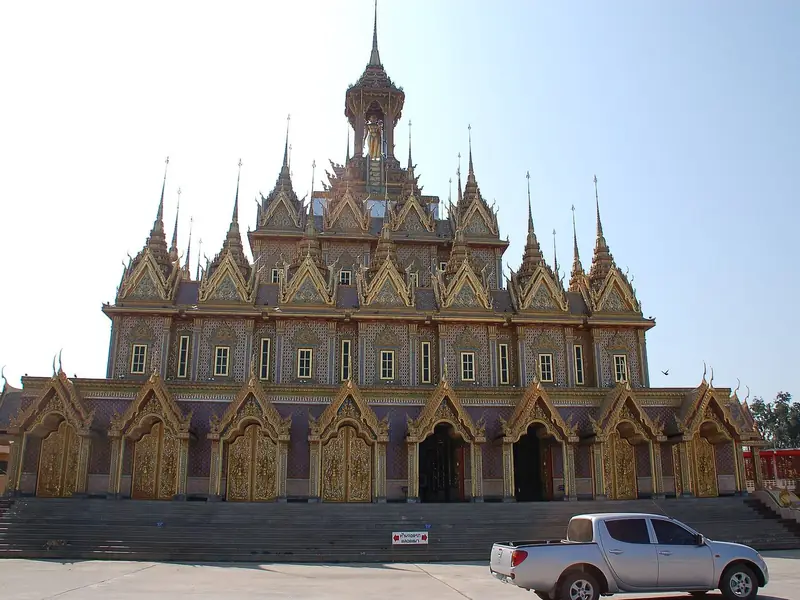
Wat Tha Sung, officially Wat Chantharam, is a large temple complex beside the Sakae Krang River in Uthai Thani, covering about 510 rai including forest land. Its best-known sight is a long hall whose walls, pillars and ceiling are covered with mirrored glass and crystal-like decoration, glittering in gold and silver tones around rows of Buddha images and statues of revered monks. The temple is linked with the respected monk Luang Pho Ruesi Ling Dam. Uthai Thani is off the usual tourist path, which makes this dazzling interior even more of a surprise.
Highlights
- Glass hall A long hall covered in mirrored glass.
- Revered monk Linked with Luang Pho Ruesi Ling Dam.
- Off the beaten track Uthai Thani sees few tourists.
Tips for Wat Tha Sung
- Cover your shoulders and knees and take off your shoes before you enter a temple building.
More photos of Wat Tha Sung

Temple hall seen across the grounds, Wat Tha Sung Photo: กสิณธร ราชโอรส · CC BY-SA 4.0 · Wikimedia Commons

Wat Tha Sung on the map
Pinch to zoom; tap a point for more info. Open circles: approximate location.

Frequently asked questions about Wat Tha Sung
Where is Wat Tha Sung?
Wat Tha Sung is in Uthai Thani, Uthai Thani province, in central Thailand.
What is Wat Tha Sung known for?
Wat Tha Sung, officially Wat Chantharam, is a large temple complex beside the Sakae Krang River in Uthai Thani, covering about 510 rai including forest land. Highlights include Glass hall, Revered monk and Off the beaten track.
How old is Wat Tha Sung?
Old temple; large-scale development from the late 20th century.